
How Do You Qualify for a Co-op in Bay Ridge?
To qualify for most Bay Ridge co-ops you need a debt to income ratio at or under about 30 percent, twelve months of liquid reserves after closing (some buildings ask for twenty four), a credit score around 700, a lender’s commitment if you are financing, and statements that prove every number. Each building publishes its own thresholds. Here is what each of those means, how to calculate the two that trip people up, and how family help, gifts, and occupancy rules fit in.
What debt to income ratio do Bay Ridge co-ops require?
Debt to income is the first number a managing agent checks, and it is stricter in a co-op than at a bank. A mortgage lender will often approve a borrower at 43 percent or higher. A Bay Ridge co-op commonly caps the ratio at or around 30 percent, and some buildings set the line at 25. The ratio is all of your monthly debt payments divided by your gross monthly income, before taxes. Debt includes the proposed mortgage payment, the proposed maintenance, car loans, student loans, personal loans, the minimum payments on every credit card, and any alimony or child support you pay. It does not include utilities, insurance, groceries, or the cost of living generally. Income is what you can document: salary, bonus history if it is consistent, self employment income as it appears on your returns, and investment income you can show. The building’s number is a ceiling, not a target, and it is the same ceiling for every applicant.
How do you calculate it?
Add every monthly debt payment, including the new mortgage and the maintenance on the apartment you are buying, then divide by gross monthly income. Here is the arithmetic on an illustrative household, with the maintenance figure typical of a two bedroom on Shore Road. The numbers are chosen to show the calculation; your building’s ceiling and your own figures replace them.
Debt to income, worked example
Illustration only. Gross household income $150,000 a year, $12,500 a month. The building’s ceiling in this example is 30 percent.
| Proposed mortgage payment | $2,300 |
| Proposed maintenance | $1,100 |
| Car loan | $400 |
| Student loans | $200 |
| Total monthly debt | $4,000 |
| $4,000 divided by $12,500 | 32.0% |
Two things follow from the arithmetic. First, the ratio is easier to move by removing a debt than by adding income, because a paid off loan disappears from the numerator in full. Second, the maintenance is part of the debt, so a building with a higher maintenance needs a lower purchase price, or a bigger down payment, to land under the same ceiling. That is one reason what the maintenance covers matters as much as the asking price.
What are post closing reserves, and how many months do you need?
Reserves, also called post closing liquidity, are the liquid assets you still hold after the down payment and closing costs have left your accounts. Liquid means cash and things you could turn into cash in days: checking, savings, money market accounts, certificates of deposit, and stocks, bonds and mutual funds in a regular brokerage account. Retirement accounts do not count in most buildings, and where they count at all they are heavily discounted, because a 401(k) or an IRA cannot be spent without penalty. Equity in another property does not count. Cars do not count. A gift that has been promised but not yet deposited does not count. The common requirement in Bay Ridge is 12 months of your monthly carrying cost, meaning the mortgage payment plus the maintenance, and some buildings require 24. Some buildings also add your other monthly debt payments to the figure they multiply. The requirement is measured on the day after closing, which is the mistake people make: the money that funds the down payment is gone by then and cannot be counted twice.
Reserves, on the same example
Illustration only. Mortgage $2,300 plus maintenance $1,100 = $3,400 a month carrying cost. Counted after the down payment and closing costs are paid.
| 12 months of mortgage plus maintenance | $40,800 |
| 24 months of mortgage plus maintenance | $81,600 |
| 12 months, with $200 of other monthly debt included | $43,200 |
| 24 months, with $200 of other monthly debt included | $86,400 |
- Checking, savings and money market balances
- Certificates of deposit
- Stocks, bonds and mutual funds in a taxable brokerage account
- 401(k), IRA, pension and other retirement accounts
- Equity in a house or another apartment
- Vehicles, jewelry, collectibles
- Gift funds not yet deposited, and the down payment itself
What credit score do you need for a co-op?
A score around 700 is the working number in Bay Ridge. Lenders will write co-op loans below that, but the building can set its own floor and it is normally higher than the lender’s. The score matters less than what sits behind it: a late mortgage or rent payment in the last two years, a collection account, or a recent bankruptcy is read on its own, whatever the score. Pull your own report before you start looking, dispute anything wrong, and pay down revolving balances, which helps both the score and the debt to income ratio at once.
Does the lender’s approval satisfy the board?
No. The lender’s commitment letter is a required document, but the building applies its own tests to the same numbers, and the building’s tests are the stricter set. Most Bay Ridge co-ops also cap how much you may finance, commonly at 75 or 80 percent of the price, so a minimum down payment of 20 to 25 percent is the building’s rule even where a lender would accept less. If you are financing, the package also carries the recognition agreement, the three way document between you, the lender and the co-op that has no equivalent in a condo or house purchase. Everything else is proof. Two years of federal tax returns with every schedule. Recent pay stubs and an employer letter stating position, salary and start date. Two or three months of statements for every account you are counting, with your name on every page and every large deposit explained. A gift letter for any gifted funds. And the financial statement itself, a single summary of everything you own and everything you owe that the managing agent reads first and checks against all of the above. A number that cannot be backed by a statement is not counted.

Can parents help, by gifting or by co-purchasing?
Usually, and the building’s rules say how. A gift is money given with no expectation of repayment, documented by a gift letter signed by the giver and, in most buildings, by the giver’s statement showing the funds. A gift improves your reserves and does not count as debt, which is why it has to be a gift and not a loan: a loan from a parent is a monthly payment in the debt to income ratio and a note that must be disclosed. Some Bay Ridge buildings accept a gifted down payment freely, some cap how much of the down payment may be gifted, and a few do not permit it. Even where the whole purchase price is a gift, you are still expected to carry the maintenance and any other obligations on your own income, and the building tests that.
Co-purchasing is different: a second buyer goes on the stock certificate and the proprietary lease as an owner and is tested as a shareholder, income, assets and credit alike. It is not limited to parents. Siblings, a parent and an adult child, an unmarried couple, or friends can co-purchase where the building allows it, and co-ops usually require everyone whose income or assets are used to qualify to be on the stock and the lease. Buildings differ on who has to live there: some accept a co-owner who will not occupy the apartment, and many do not. When a parent wants to buy for an adult child, or a child for a parent, there are three shapes, and the building decides which of them it permits: a purchase in the occupant’s name with the money gifted, a co-purchase with both names on the stock and the lease, or a purchase in the parent’s name alone with the child as the approved occupant, which some buildings allow and many treat as a sublet from the first day and refuse. Some buildings apply their thresholds to the combined picture, some test each buyer on their own, and some limit co-purchasing to immediate family. A guarantor, someone who signs to back the obligation without owning, sits between a gift and a co-purchase, and many buildings do not accept one. Our building guides publish the sublet and occupancy rules for the Bay Ridge co-ops we work in most, and we confirm the gift, co-purchase and guarantor policy with the managing agent before you write.
Do you have to live there, and who has to be on the lease?
Yes. A co-op is owner occupied housing by design, and nearly every Bay Ridge co-op requires the apartment to be your primary residence. A part time residence, an investment unit, or an apartment bought for someone who will not be on the lease is not permitted in most buildings. Where a purchase for a family member is allowed, it usually takes one of the forms above, and the building’s occupancy rule decides which: in many buildings the person who lives there has to be on the stock and the lease, alone or with the buyer, because a shareholder who does not live in the apartment and an occupant who is not a shareholder is the arrangement a sublet policy exists to control. Subletting, if permitted at all, usually opens only after a period of residence and needs the building’s consent each time. These rules are published, they apply to everyone, and they are worth reading in the building guide before the first showing, because they decide whether a purchase is possible before any number does.
If you are starting a co-op search, the next step after these numbers is the board interview, and before that, how buyer representation works when the buyer pays nothing for it. Call or text the office at 718-333-5233 and we will tell you what a specific building requires before you write an offer.

The Soldano Realty Buyer’s Guide
Download our free Buyer’s Guide. It covers the whole buying process from pre approval to closing day, co-op versus condo, and the debt to income and reserves formulas boards use, so you can run them on yourself before you make an offer.
Bay Ridge co-ops on the market right now
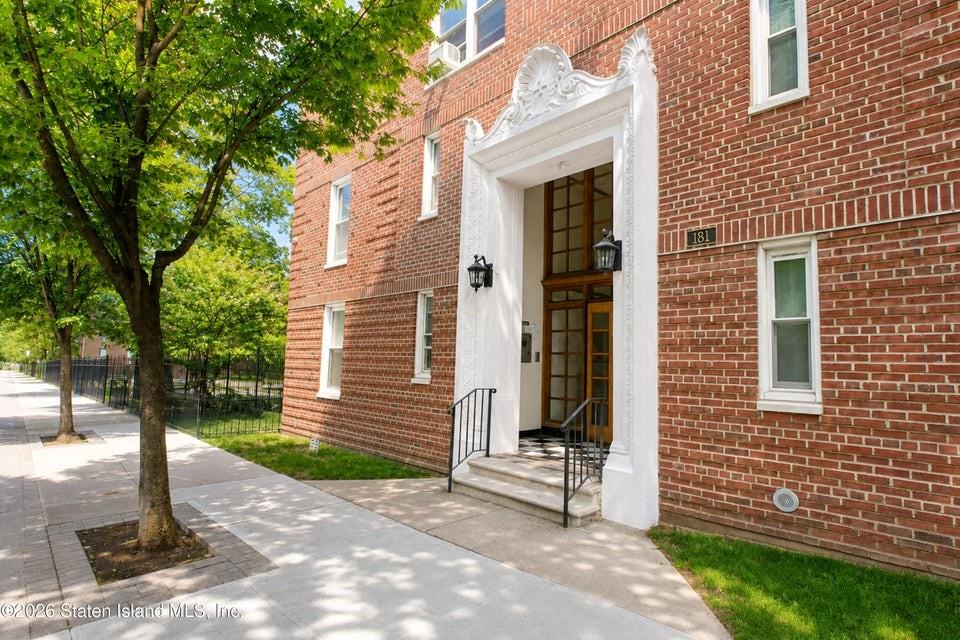 $315,000
Active
$315,000
Active
181 73rd Street 424 Brooklyn, New York
1 Beds 1 Baths 685 SqFt
 $795,000
Active
$795,000
Active
9437 Shore Road F7 New York City, New York
2 Beds 2 Baths 1,400 SqFt
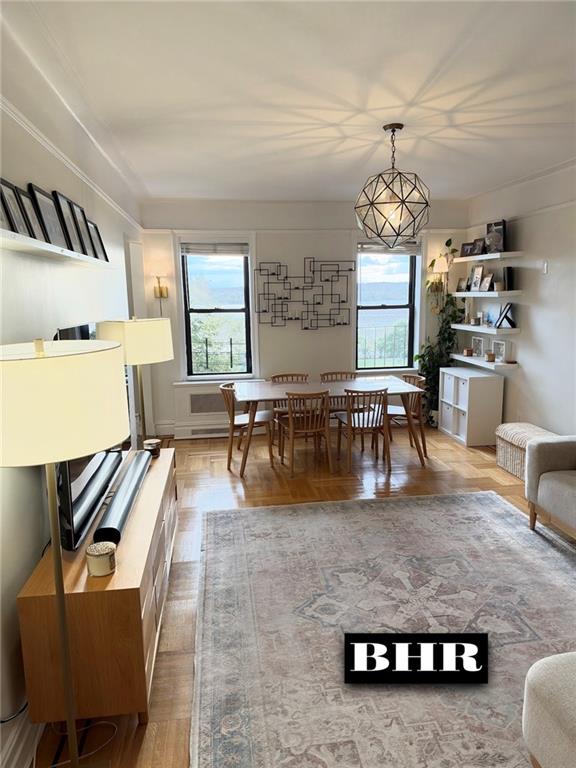 $635,000
Active
$635,000
Active
9701 Shore Road 2O Brooklyn, New York
2 Beds 1 Baths 1,025 SqFt
 $1,395,000
Active
$1,395,000
Active
6917 SHORE Road 4A New York City, New York
2 Beds 2 Baths 1,271 SqFt
View all Bay Ridge co-ops for sale → or search every Bay Ridge listing by price, size and building.
Once you know what you qualify for, every co-op for sale in Bay Ridge is on one page, with what co-ops here sell for and a guide to each building.
Own a co-op in Bay Ridge?
Find out what it is worth before you decide anything.